
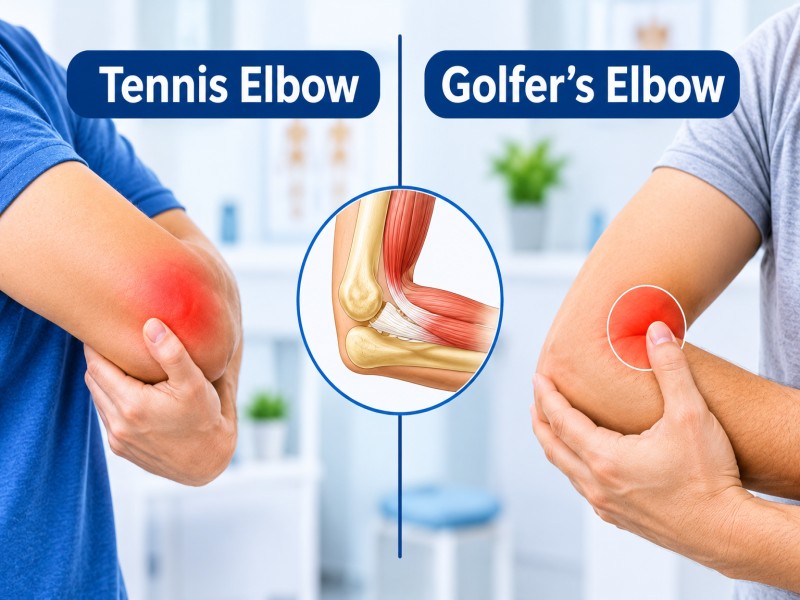
Elbow pain can make simple daily activities difficult, whether you are lifting a bag, typing on a computer, exercising, or gripping household objects. Two common causes of this discomfort are tennis elbow and golfer’s elbow. Although their names are associated with sports, both conditions can affect people who do not play tennis or golf. If you are experiencing persistent elbow discomfort, consulting the best orthopedic doctor in delhi can help identify the underlying cause and guide appropriate care.
Understanding the difference between these conditions is important because they affect different sides of the elbow and involve different tendon groups. Recognising the symptoms early and seeking medical advice can help prevent persistent discomfort and support recovery.
What Is Tennis Elbow?
Tennis elbow, medically known as lateral epicondylitis or lateral elbow tendinopathy, affects the tendons connecting the forearm muscles to the outer side of the elbow. These tendons help control wrist and finger movements.
The condition commonly develops when repetitive activities place excessive stress on these tendons. Repeated gripping, lifting, twisting, and extending the wrist can gradually contribute to tendon damage and degeneration.
Despite its name, tennis elbow is not limited to tennis players. Office workers, painters, carpenters, cooks, and people performing repetitive household tasks may also experience this condition.
Common symptoms of tennis elbow include:
- Pain and tenderness on the outer side of the elbow.
- Discomfort while shaking hands or gripping objects.
- Pain when lifting items with the palm facing down.
- Weakness in the wrist or grip.
- Increased discomfort during repetitive arm movements.
What Is Golfer’s Elbow?
Golfer’s elbow, medically known as medial epicondylitis or medial elbow tendinopathy, affects the tendons attached to the inner side of the elbow.
It generally develops due to repeated wrist bending, forceful gripping, or forearm rotation. These movements place stress on the tendons responsible for wrist flexion and forearm movement. Over time, repeated strain can lead to tendon degeneration and discomfort.
Like tennis elbow, golfer’s elbow can affect people across different age groups and professions, including those who perform repetitive manual tasks.
Common symptoms of golfer’s elbow include:
- Pain or tenderness on the inner side of the elbow.
- Discomfort while bending the wrist or gripping objects.
- Pain when lifting or carrying heavy items.
- Reduced grip strength.
- Tingling or numbness in the ring and little fingers in some cases due to irritation of the nearby ulnar nerve.
Persistent tingling or numbness should be medically evaluated because it may indicate nerve involvement.
Tennis Elbow vs Golfer’s Elbow: Key Differences
Although both conditions affect the elbow tendons, their location and the movements that trigger discomfort are different.
| Feature | Tennis Elbow | Golfer’s Elbow |
|---|---|---|
| Pain location | Outer side of the elbow | Inner side of the elbow |
| Medical term | Lateral epicondylitis | Medial epicondylitis |
| Affected tendons | Wrist extensor tendons | Wrist flexor and pronator tendons |
| Common triggers | Repeated wrist extension and gripping | Repeated wrist flexion and gripping |
| Typical symptoms | Pain while lifting and gripping | Pain while bending the wrist and gripping |
| Possible complications | Persistent tendon pain and weakness | Persistent tendon pain and possible ulnar nerve irritation |
The easiest way to distinguish between the two is the location of the pain. Tennis elbow generally affects the outside of the elbow, whereas golfer’s elbow causes discomfort on the inside.
For additional background on the medical terminology and condition, readers can explore Lateral Epicondylitis (Tennis Elbow) on Wikipedia. However, online information should not replace an individual medical assessment.
What Causes Tennis Elbow and Golfer’s Elbow?
Both conditions usually develop because of repeated mechanical stress rather than a single injury. Several everyday activities and lifestyle factors can contribute to tendon problems.
- Repetitive movements: Frequent gripping, lifting, twisting, and wrist movements can overload the elbow tendons.
- Work-related strain: Jobs involving tools, machinery, painting, typing, or manual labour may increase tendon stress.
- Sports activities: Incorrect techniques or excessive training in tennis, golf, weightlifting, and other sports can contribute to these conditions.
- Sudden increase in activity: Increasing exercise intensity or workload without adequate preparation may place unnecessary pressure on the tendons.
- Age-related changes: Tendon structure and recovery capacity can change with age, increasing susceptibility to certain tendon problems.
Identifying these contributing factors helps patients and healthcare professionals understand what may be triggering the discomfort.
How Are Tennis Elbow and Golfer’s Elbow Diagnosed?
Diagnosis generally begins with a medical history and physical examination. An orthopaedic specialist may ask about the location of pain, duration of symptoms, occupation, sports activities, and movements that make the discomfort worse.
The examination may include checking elbow tenderness, wrist strength, grip strength, and pain during specific resisted movements.
In typical cases, a clinical examination is often sufficient. However, additional investigations may be recommended when symptoms are unusual, persistent, or suggest another condition.
These may include:
- X-ray: Helps identify bone abnormalities, arthritis, or other joint-related problems.
- Ultrasound: Helps assess tendon structure and identify changes associated with tendinopathy.
- MRI: May be recommended when the diagnosis is uncertain or detailed assessment of soft tissues is required.
Consulting an experienced orthopaedic specialist, such as the best orthopedic doctor in delhi, can help patients understand the cause of their elbow pain and determine whether additional investigations are necessary.
Treatment Options for Tennis Elbow and Golfer’s Elbow
Most people improve with non-surgical treatment, although recovery may take several weeks or months depending on the severity and duration of the condition.
1. Activity Modification
Reducing or temporarily changing activities that trigger pain is an important first step. Repeatedly stressing the affected tendon should be avoided, but complete immobilisation is generally unnecessary.
2. Physiotherapy and Exercises
A structured physiotherapy programme can improve flexibility, strength, and tendon function. Depending on the condition, exercises may include gentle stretching, progressive strengthening, and eccentric loading.
3. Pain Management
Ice packs may provide temporary relief, particularly after activities. Appropriate pain-relieving medication may also be considered under medical guidance, depending on individual health conditions.
4. Supportive Braces
An elbow counterforce strap or wrist support may help reduce discomfort during certain activities. These supports should be used appropriately and do not replace rehabilitation.
5. Advanced Treatment Options
For persistent symptoms, a specialist may consider additional treatment options based on clinical findings. Selected injection-based therapies may be discussed in appropriate cases. Surgery is generally reserved for carefully selected patients who do not improve despite an adequate course of conservative treatment.
The best orthopedic doctor in delhi can help determine an appropriate treatment plan based on tendon involvement, symptom severity, and daily activity requirements.
When Should You See an Orthopaedic Specialist?
Occasional elbow discomfort may improve with activity modification and appropriate care. However, medical evaluation is advisable if:
- Elbow pain continues for several weeks.
- You experience difficulty gripping or lifting everyday objects.
- Pain interferes with work, exercise, or daily activities.
- There is noticeable swelling, stiffness, or reduced movement.
- You experience numbness, tingling, or weakness in your hand.
- Pain develops after a fall or direct injury.
Sudden severe pain, significant swelling, visible deformity, or an inability to move the elbow following an injury requires prompt medical attention.
If elbow discomfort is affecting your routine, seeking timely orthopaedic advice can help identify the underlying problem, rule out other possible causes, and guide appropriate treatment and rehabilitation.
How Can You Prevent Tennis Elbow and Golfer’s Elbow?
Although these conditions cannot always be prevented, a few practical measures may help reduce unnecessary strain on the elbow tendons:
- Warm up before playing sports or exercising.
- Avoid sudden increases in workout intensity.
- Maintain proper techniques while lifting weights and performing repetitive tasks.
- Take regular breaks during prolonged computer work or manual activities.
- Strengthen forearm muscles gradually.
- Avoid repeatedly pushing through persistent elbow pain.
Paying attention to early symptoms and modifying activities can help reduce the risk of prolonged tendon problems.
Conclusion
Tennis elbow and golfer’s elbow may cause similar discomfort, but they affect different sides of the elbow and involve different tendon groups. Tennis elbow typically causes pain on the outer side, while golfer’s elbow affects the inner side. Both conditions can develop due to repetitive movements and may interfere with everyday activities if left unaddressed.
Early diagnosis, appropriate activity modification, and a structured rehabilitation programme play an important role in recovery. Understanding the symptoms and seeking timely medical advice can help patients make informed decisions about their orthopaedic health.
At SADHU VASWANI MISSION MEDICAL CENTRE, patients can seek medical guidance for orthopaedic concerns, including persistent elbow pain and tendon-related conditions. An individualised assessment can help identify the problem and guide appropriate care.
Contact SADHU VASWANI MISSION MEDICAL CENTRE for consultation and guidance regarding your orthopaedic health.