
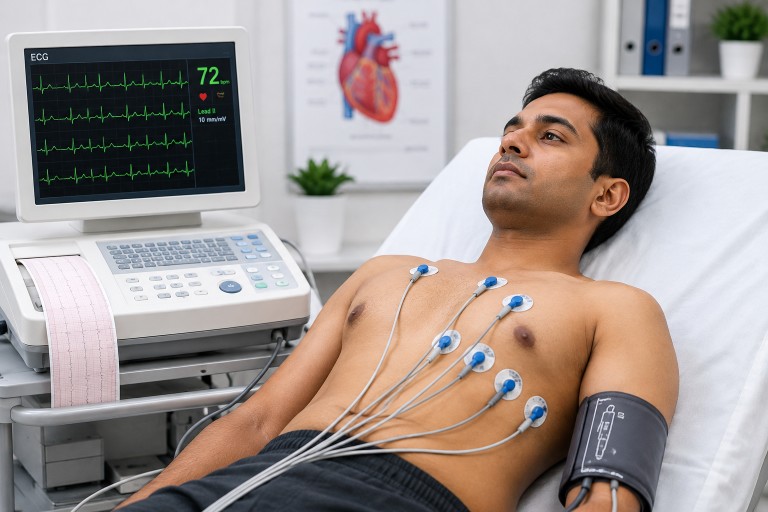
An electrocardiogram (ECG) is a common diagnostic test used to record the electrical activity of the heart. Doctors may recommend an ECG when a person experiences chest discomfort, an irregular heartbeat, dizziness, or other symptoms that could indicate a heart-related concern. Visiting an ECG Test Centre in Delhi can help patients undergo this test as advised by their healthcare professional.
An ECG is a quick, non-invasive investigation that provides useful information about heart rate and rhythm. Understanding when it is recommended can help you make informed decisions about your heart health.
What Is an ECG Test?
An electrocardiogram, commonly known as an ECG or EKG, records the electrical signals generated by the heart during each heartbeat.
Small electrodes are placed on the chest, arms, and legs. These electrodes detect electrical activity and display it as wave patterns on a monitor or printed report.
An ECG can help doctors assess:
- Heart rate
- Heart rhythm
- Certain electrical conduction abnormalities
- Possible signs of reduced blood supply to the heart
- Certain changes associated with previous heart damage
An ECG is generally painless and does not involve radiation.
When Does a Doctor Recommend an ECG Test?
Doctors may recommend an ECG for several reasons, depending on a person’s symptoms, medical history, and risk factors.
1. Chest Pain or Discomfort
Chest pain or pressure can sometimes be associated with heart conditions. An ECG may be performed to check for electrical changes that could indicate a heart-related problem.
However, a normal ECG does not always rule out a heart attack or other cardiac conditions. Additional tests and medical evaluation may be required.
2. Irregular Heartbeat or Palpitations
Palpitations are sensations of a racing, fluttering, pounding, or skipped heartbeat.
An ECG can help identify certain rhythm abnormalities, including:
- Atrial fibrillation
- Bradycardia (slow heart rate)
- Tachycardia (fast heart rate)
- Certain conduction abnormalities
If symptoms occur occasionally, a doctor may recommend longer-term heart rhythm monitoring because a routine ECG records only a short period of heart activity.
3. Shortness of Breath
Breathlessness may occur due to several conditions, including heart and lung problems. If a doctor suspects a cardiac cause, an ECG may be included in the initial assessment.
Breathlessness accompanied by chest discomfort, fainting, or severe weakness requires prompt medical attention.
4. Dizziness or Fainting
Unexplained dizziness or fainting may sometimes be associated with abnormal heart rhythms or other cardiovascular conditions.
An ECG helps doctors examine the heart’s electrical activity and decide whether further cardiac investigations are needed.
5. High Blood Pressure
People with high blood pressure may have an increased risk of cardiovascular complications. Depending on their condition and medical history, doctors may recommend an ECG to assess certain heart-related changes.
An ECG does not diagnose high blood pressure, but it can provide additional information about heart health.
6. Monitoring Existing Heart Conditions
Patients with known heart conditions may need ECG testing to monitor changes in heart rhythm or electrical activity.
Doctors may also use ECG results to assess the effects of certain treatments or medications.
7. Before Certain Medical Procedures
An ECG may be recommended before surgery or certain medical procedures, depending on the patient’s age, health history, symptoms, and cardiovascular risk.
It is not necessary for every patient before every procedure. The treating doctor decides whether it is appropriate.
What Does an ECG Test Detect?
An ECG provides information about the heart’s electrical activity and can help identify several abnormalities.
Some conditions or findings that may be detected include:
- Irregular heart rhythms
- Unusually fast or slow heart rates
- Certain electrical conduction problems
- Possible signs of reduced blood flow to the heart
- Certain patterns associated with previous heart damage
- Some changes that may occur with heart enlargement
An ECG is only one part of cardiac evaluation. Doctors may recommend an echocardiogram, blood tests, stress testing, or other investigations depending on the findings.
How Is an ECG Test Performed?
An ECG is usually a simple and quick procedure. The process generally involves the following steps:
- The patient lies comfortably on an examination bed.
- Small electrodes are attached to the chest, arms, and legs.
- The ECG machine records the heart’s electrical signals.
- The patient is asked to remain still during the recording.
- The recorded heart activity is displayed as a tracing or printed report.
A standard resting ECG usually takes only a few minutes to complete.
Is Any Preparation Required Before an ECG?
A routine ECG generally requires very little preparation. However, following a few simple steps can help make the process easier.
- Wear comfortable clothing that allows access to the chest, arms, and legs.
- Avoid applying oily lotions or creams to the skin before the test.
- Inform the healthcare professional about your current medications.
- Share details of any existing heart conditions.
- Try to remain relaxed and still during the recording.
Do not stop any prescribed medication before an ECG unless your doctor specifically advises you to do so.
How Long Does It Take to Get an ECG Report?
The ECG recording itself usually takes a few minutes. A healthcare professional or doctor then reviews the tracing and interprets the findings in the context of the patient’s symptoms and medical history.
If an abnormality is suspected, additional investigations may be recommended.
When Should You Consider ECG Testing in Delhi?
If you experience recurring palpitations, unexplained dizziness, chest discomfort, or breathlessness, consult a healthcare professional to determine whether an ECG is appropriate.
Professional ECG Testing in Delhi can help patients access this diagnostic investigation when recommended by their doctor.
An ECG may also form part of a broader Heart Checkup in Delhi, depending on individual health needs and cardiovascular risk factors.
Why Is Timely Heart Evaluation Important?
Some heart conditions may cause noticeable symptoms, while others can develop without obvious warning signs.
Timely medical evaluation can help doctors:
- Investigate unexplained cardiac symptoms
- Identify certain rhythm abnormalities
- Monitor existing heart conditions
- Assess cardiovascular health when clinically indicated
- Decide whether further diagnostic tests are required
A routine ECG should not be considered a complete heart health assessment. The appropriate investigations depend on each person’s medical needs.
Summary
An ECG is a useful diagnostic test that records the electrical activity of the heart. Doctors may recommend it for chest discomfort, palpitations, dizziness, fainting, breathlessness, high blood pressure, or monitoring existing heart conditions.
If you need an Electrocardiogram Test in Delhi, consult a qualified healthcare professional to understand whether the test is suitable for your symptoms and medical history. Early evaluation and appropriate follow-up can support better cardiovascular care.
Also Read
- What Does a General Physician Do?
- Complete Guide to Choosing the Right Ortho Hospital in Delhi
- What Is Homeopathy and How Does It Approach Patient Care?
- Bleeding Gums: Causes, Prevention and Treatment
Consult at SVMC Delhi
SADHU VASWANI MISSION MEDICAL CENTRE provides diagnostic and healthcare services to support patients with their medical needs. If your doctor recommends an ECG or you experience symptoms that may be related to your heart, consult a healthcare professional for appropriate evaluation and guidance.
FAQs
1. Why would a doctor recommend an ECG test?
A doctor may recommend an ECG to investigate chest discomfort, irregular heartbeat, palpitations, dizziness, fainting, or breathlessness. It may also be used to monitor certain existing heart conditions.
2. Is an ECG test painful?
No. A routine ECG is painless and non-invasive. Electrodes are placed on the skin to record the electrical activity of the heart.
3. How long does an ECG test take?
A standard resting ECG usually takes only a few minutes. The recording is quick, although reviewing and interpreting the report may take additional time.
4. Can an ECG detect a heart attack?
An ECG can show changes that may indicate a heart attack, but it cannot detect every heart attack on its own. Doctors may also recommend blood tests and additional investigations.
5. Do I need to fast before an ECG test?
No. Fasting is generally not required before a routine ECG. Follow any specific instructions provided by your healthcare professional.
6. Can a normal ECG guarantee that my heart is healthy?
No. A normal ECG does not rule out every heart condition. If symptoms continue, your doctor may recommend additional tests or longer-term heart monitoring.
7. When should I seek urgent medical attention for chest pain?
Seek emergency medical attention if you experience new or severe chest pain, particularly with breathlessness, sweating, nausea, fainting, or pain spreading to the arm, jaw, or back. Do not delay emergency care to arrange a routine ECG.