
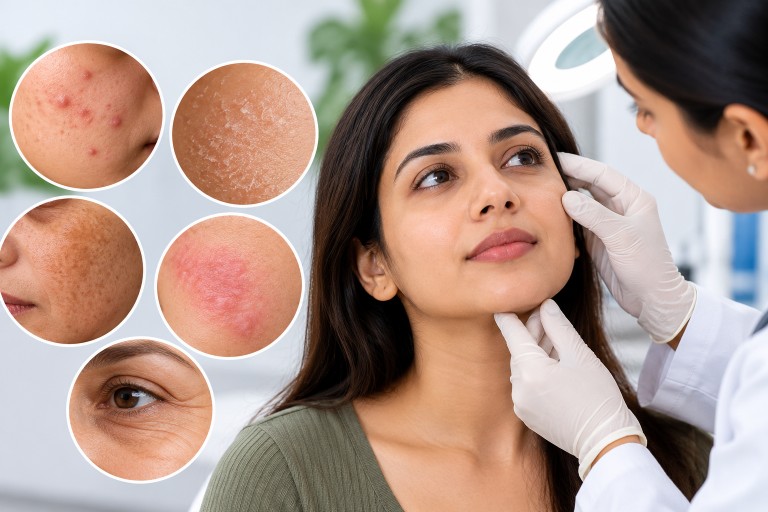
kin problems are common in adults and can occur due to hormonal changes, ageing, allergies, infections, environmental factors, or everyday skincare habits. Conditions such as acne, pigmentation, dry skin, eczema, and fungal infections may affect both skin health and confidence. Consulting a Skin Doctor in Delhi can help identify the cause of a skin concern and determine the most suitable treatment.
Understanding common skin problems, recognising warning signs, and following an appropriate skincare routine can help adults maintain healthier skin.
What Are the Most Common Skin Problems in Adults?
Adult skin concerns vary depending on skin type, lifestyle, medical history, and environmental exposure. Some conditions are temporary, while others may require ongoing medical care.
Common skin problems include:
- Acne and pimples
- Dry and sensitive skin
- Eczema and dermatitis
- Skin pigmentation and dark spots
- Fungal skin infections
- Rosacea and facial redness
- Premature skin ageing
- Itching and skin rashes
Identifying the underlying cause is important because different conditions can produce similar symptoms but require different treatments.
1. Adult Acne and Pimples
Acne does not affect only teenagers. Adults may experience pimples, blackheads, whiteheads, and painful inflammatory spots due to hormonal fluctuations, genetics, stress, or certain skincare products.
Common Symptoms
- Whiteheads and blackheads
- Red or inflamed pimples
- Deep, painful bumps
- Dark marks after acne heals
- Acne scars
How Can Adult Acne Be Managed?
Use gentle skincare products, avoid picking pimples, and choose non-comedogenic moisturisers and sunscreen. Persistent acne, painful lesions, or acne that leaves scars should be assessed by a dermatologist.
Treatment may include prescription creams, oral medication, or other procedures depending on the severity of the condition.
2. Dry and Sensitive Skin
Dry skin occurs when the skin loses too much moisture. It may become rough, flaky, tight, itchy, or irritated. Frequent washing, harsh soaps, weather changes, and certain skin conditions can contribute to dryness.
Tips for Managing Dry Skin
- Use a gentle, fragrance-free cleanser.
- Apply moisturiser regularly, especially after bathing.
- Avoid very hot showers.
- Choose skincare products suited to your skin type.
- Protect your skin from harsh weather.
If dryness is persistent, painful, cracked, or accompanied by a severe rash, seek professional advice.
3. Skin Pigmentation and Dark Spots
Pigmentation occurs when areas of the skin become darker than the surrounding skin. Common concerns include sunspots, post-acne marks, and melasma.
Possible contributing factors include sun exposure, hormonal changes, inflammation, and certain medications.
How Can Pigmentation Be Prevented?
Daily broad-spectrum sunscreen, protective clothing, and avoiding unnecessary sun exposure can help reduce further pigmentation. Treatment depends on the type and cause of the discoloration.
A dermatologist can recommend appropriate topical treatments or procedures. Avoid using unprescribed bleaching creams, as some products may irritate or damage the skin.
4. Eczema and Dermatitis
Eczema and dermatitis can cause dry, itchy, red, or inflamed skin. Symptoms may appear on the hands, face, neck, or other parts of the body.
Common triggers include irritants, fragrances, certain detergents, and allergens. Some forms of eczema are also associated with a personal or family history of allergic conditions.
Managing Eczema
- Use moisturisers regularly.
- Avoid known irritants.
- Choose gentle skincare products.
- Avoid scratching affected areas.
- Follow medical advice for prescribed creams or medication.
Consult a dermatologist if the rash keeps returning, disrupts sleep, spreads, or does not improve with basic care.
5. Fungal Skin Infections
Fungal infections can affect areas such as the feet, groin, body folds, and other parts of the skin. Symptoms may include itching, redness, scaling, or ring-shaped patches.
Warm, humid conditions and prolonged moisture can encourage certain fungal infections.
How Are Fungal Infections Treated?
Treatment depends on the affected area and the type of infection. A healthcare professional may recommend an appropriate antifungal medicine and advise you to keep the affected area clean and dry.
Avoid using steroid-containing combination creams without medical guidance. These can sometimes worsen or disguise fungal infections.
6. Rosacea and Facial Redness
Rosacea is a chronic skin condition that can cause facial redness, visible blood vessels, and acne-like bumps. Some people also experience burning, stinging, or eye irritation.
Sunlight, heat, spicy foods, and alcohol may trigger symptoms in some individuals.
What Can Help?
Identify personal triggers, use gentle skincare products, and apply sunscreen regularly. A dermatologist can assess persistent facial redness and recommend suitable treatment.
7. Premature Skin Ageing
Fine lines, wrinkles, uneven skin tone, and loss of skin elasticity can develop with age. Sun exposure, smoking, and environmental factors may contribute to visible skin ageing.
Tips for Healthy Ageing Skin
- Apply broad-spectrum sunscreen daily.
- Moisturise according to your skin type.
- Avoid smoking.
- Maintain a balanced diet.
- Follow a consistent skincare routine.
- Seek professional advice before using strong anti-ageing products.
Healthy skincare habits can help protect the skin, although they cannot completely prevent natural ageing.
8. Itchy Skin and Skin Rashes
Itching and rashes can result from allergies, insect bites, eczema, infections, medication reactions, or other medical conditions.
The appearance, location, duration, and associated symptoms can help a doctor determine the likely cause.
Do not assume that every itchy rash is an allergy or fungal infection. Avoid scratching the affected area and seek medical advice if the rash persists, spreads, or worsens.
When Should You See a Dermatologist?
Many mild skin concerns improve with appropriate skincare, but some conditions require professional evaluation.
Consider consulting a dermatologist if you experience:
- Persistent or painful acne
- Recurrent skin rashes
- Severe itching or swelling
- Skin infections that are spreading
- Pigmentation that continues to worsen
- Skin problems that do not respond to basic care
- New or changing moles
- Unexplained changes in skin texture or colour
Seek urgent medical attention if a rash develops with breathing difficulty, swelling of the lips or tongue, or other signs of a severe allergic reaction. Rapidly spreading redness with fever or severe pain also needs prompt medical assessment.
How to Choose the Right Skincare Routine for Adults
An effective routine does not need to include many products. The right approach depends on your skin type and specific concerns.
A simple routine may include:
Morning Routine
- Cleanse your face with a gentle cleanser.
- Apply a suitable moisturiser.
- Use broad-spectrum sunscreen with SPF 30 or higher.
Evening Routine
- Remove makeup and sunscreen.
- Cleanse gently.
- Apply moisturiser.
- Use dermatologist-recommended treatments if needed.
Introduce new products gradually and avoid combining multiple strong active ingredients without guidance, particularly if you have sensitive skin.
Why Professional Advice Matters for Adult Skin Care
Different skin conditions can look alike, making self-diagnosis difficult. Using the wrong product or treatment may worsen irritation, delay recovery, or cause unwanted side effects.
Professional Adult Skin Care in Delhi can help address individual skin concerns through appropriate assessment, personalised skincare advice, and treatment recommendations based on the underlying condition.
If you are looking for Treatment for common skin problems in Delhi, a dermatologist can help determine whether you need prescription medication, lifestyle changes, skincare adjustments, or further testing.
Summary
Common adult skin problems include acne, dry skin, pigmentation, eczema, fungal infections, facial redness, and itchy rashes. Many concerns can be managed with gentle skincare and appropriate preventive habits, while persistent or severe symptoms may require medical treatment.
Recognising warning signs and seeking timely professional advice can help prevent complications and support long-term skin health.
Also Read
- Bleeding Gums: Causes, Prevention and Treatment
- Common Causes of Cough and Cold in Children
- What Does a Full Body Health Checkup Include?
- What Is Homeopathy and How Does It Approach Patient Care?
Consult at SVMC Delhi
SADHU VASWANI MISSION MEDICAL CENTRE provides healthcare services to support patients with a range of health concerns. If you are experiencing persistent acne, skin irritation, pigmentation, or recurring rashes, consult a qualified healthcare professional for an appropriate assessment and treatment plan.
FAQs
1. What are the most common skin problems in adults?
Common skin problems include acne, dry skin, pigmentation, eczema, dermatitis, fungal infections, rosacea, and itchy rashes. The cause and appropriate treatment vary from person to person.
2. When should I visit a dermatologist?
You should consider visiting a dermatologist for persistent acne, recurring rashes, severe itching, worsening pigmentation, suspected skin infections, or skin changes that do not improve with basic care.
3. Can adult acne be treated?
Yes. Adult acne can often be managed with suitable skincare and, when needed, prescription treatments. A dermatologist can recommend treatment based on the severity and type of acne.
4. How can I prevent common skin problems?
Gentle cleansing, regular moisturising, daily sun protection, avoiding known irritants, and using products suited to your skin type can help maintain healthy skin.
5. Is sunscreen necessary for adults?
Yes. Broad-spectrum sunscreen helps protect against ultraviolet radiation and can reduce sunburn, premature skin ageing, and worsening of some pigmentation concerns.
6. Should I use home remedies for skin problems?
Some home remedies may irritate the skin or worsen certain conditions. Avoid applying harsh substances or unverified treatments, and consult a healthcare professional if symptoms persist or worsen.