
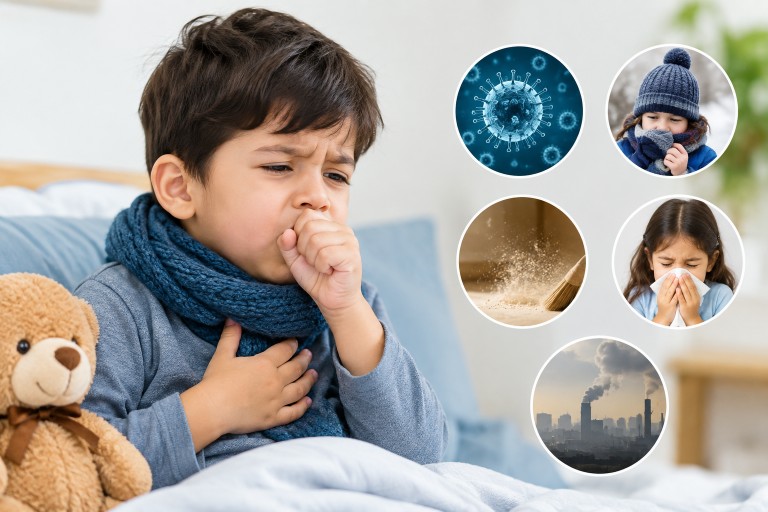
Cough and cold are among the most common health problems in children. A child may develop a cough, runny nose, sneezing, congestion, or mild fever due to infections, allergies, or environmental factors. Understanding the common causes can help parents know when home care may be enough and when Cough and Cold Treatment in Children may be needed.
Why Do Children Get Cough and Cold Frequently?
Children are often exposed to viruses at school, daycare, playgrounds, and other places where they interact closely with other children. Their developing immune systems also encounter many infections for the first time.
Common reasons for cough and cold in children include:
- Viral infections
- Close contact with infected people
- Seasonal changes
- Allergies
- Exposure to dust and pollution
- Sudden changes in temperature
- Irritants such as smoke or strong fragrances
Most common colds are caused by viruses and usually improve with supportive care.
Common Causes of Cough and Cold in Children
1. Viral Infections
Viral infections are one of the most common causes of cough and cold symptoms in children. Viruses can cause inflammation in the nose and throat, resulting in congestion, sneezing, coughing, and a runny nose.
Children can catch respiratory viruses through close contact, respiratory droplets, or by touching contaminated surfaces and then touching their nose or mouth.
2. Seasonal Changes
Changes in weather can coincide with an increase in respiratory infections. Children may spend more time indoors during certain seasons, which can increase close contact with others.
Cold and dry air can also irritate the nose and throat in some children.
3. Allergies
Allergies can sometimes cause symptoms that look similar to a common cold. Dust, pollen, pet dander, and other allergens may trigger:
- Sneezing
- Runny or blocked nose
- Watery eyes
- Throat irritation
- Coughing
Unlike a viral cold, allergy symptoms may continue as long as the child remains exposed to the trigger.
4. Exposure to Dust and Pollution
Dust, smoke, air pollution, and other airborne irritants can affect a child’s respiratory system. Regular exposure may cause throat irritation, coughing, or worsening of existing respiratory symptoms.
Keeping indoor spaces clean and avoiding exposure to tobacco smoke can help reduce unnecessary irritation.
5. Close Contact With Other Children
Children commonly share toys, classroom spaces, sports equipment, and other objects. Close contact makes it easier for respiratory infections to spread.
Teaching children to wash their hands regularly and cover their mouth and nose when coughing or sneezing can help reduce the spread of infections.
Common Symptoms of Cough and Cold
Symptoms can vary depending on the underlying cause. Common symptoms include:
- Runny or blocked nose
- Sneezing
- Cough
- Sore throat
- Mild fever
- Headache
- Tiredness
- Reduced appetite
- Difficulty sleeping because of congestion
Most uncomplicated viral respiratory infections gradually improve with time.
How Can Parents Care for a Child With Cough and Cold?
For mild symptoms, supportive care can help the child remain comfortable.
Parents can:
- Encourage adequate fluids
- Allow the child to get sufficient rest
- Keep the room comfortably ventilated
- Use saline nasal drops when appropriate
- Offer warm fluids to children old enough to safely drink them
- Keep the child away from cigarette smoke and other irritants
- Encourage regular handwashing
Parents should follow age-appropriate medical advice when giving any medicine to a child.
When Is Child Cough Treatment Needed?
A cough can have many different causes, so treatment depends on the underlying problem. Child cough treatment may be considered when coughing is persistent, severe, repeatedly returns, affects sleep, or occurs with other concerning symptoms.
A pediatrician may assess the child’s symptoms, medical history, breathing, and other clinical findings before recommending appropriate treatment.
Parents should avoid giving antibiotics or cough medicines without medical advice, particularly to young children.
When May Child Cold Treatment Be Needed?
Most common colds improve with supportive care. However, medical evaluation may be appropriate if symptoms are severe, persistent, or accompanied by concerning signs.
Child cold treatment depends on the cause and the child’s age and symptoms. A healthcare professional can determine whether the child needs supportive care, further examination, or specific treatment.
Signs That Your Child Should See a Doctor
Parents should seek medical attention if a child develops symptoms such as:
- Difficulty breathing
- Fast or laboured breathing
- Bluish lips or face
- Severe weakness or unusual sleepiness
- Persistent high fever
- Signs of dehydration
- Severe or worsening cough
- Symptoms that are not improving or are getting worse
- Cough associated with wheezing or breathing difficulty
Very young infants with fever or breathing problems should receive prompt medical assessment.
How Can Cough and Cold Be Prevented?
It is not possible to prevent every childhood cold, but several everyday habits can reduce the spread of respiratory infections.
Encourage Hand Hygiene
Teach children to wash their hands regularly, especially before eating and after coughing, sneezing, or returning home from school or other public places.
Avoid Smoke Exposure
Children should be kept away from cigarette smoke and other tobacco products because smoke can irritate the respiratory tract.
Teach Respiratory Hygiene
Encourage children to cover their mouth and nose when coughing or sneezing and dispose of tissues properly.
Maintain a Healthy Routine
Adequate sleep, balanced nutrition, physical activity, and appropriate vaccinations can support overall health.
Can Every Cough and Cold Be Treated at Home?
No. Mild cold symptoms can often be managed with supportive care, but persistent or severe symptoms may require medical evaluation.
Parents should also remember that a cough is a symptom rather than a disease itself. Its cause can range from a simple viral infection to allergies or other respiratory conditions.
Summary
Cough and cold are common among children and can occur due to viral infections, allergies, environmental irritants, seasonal changes, and close contact with other children. Most mild infections improve with rest, fluids, and supportive care.
However, persistent, severe, or unusual symptoms should be evaluated by a healthcare professional. Appropriate Cough and Cold Treatment in Children depends on the child’s age, symptoms, and underlying cause.
Also Read
- What Does a Full Body Health Checkup Include?
- What Is Homeopathy and How Does It Approach Patient Care?
- Why Do You Keep Getting a Sore Throat?
- When Should You Visit a Doctor for Persistent Symptoms?
Consult at SVMC Delhi
SADHU VASWANI MISSION MEDICAL CENTRE provides healthcare services for children and families. If your child has persistent cough, cold symptoms, fever, breathing difficulty, or other concerning symptoms, consult a qualified healthcare professional for appropriate evaluation and care.
FAQs
1. What is the most common cause of cough and cold in children?
Viral respiratory infections are among the most common causes of cough and cold symptoms in children. Allergies and exposure to irritants such as dust and smoke can also cause similar symptoms.
2. How long does a common cold usually last in children?
A common cold often improves gradually over several days. Some symptoms, particularly coughing, may continue for longer. If symptoms are severe, worsening, or not improving, medical evaluation may be appropriate.
3. Should I give antibiotics to my child for a cold?
Antibiotics do not treat viral infections such as most common colds. They should only be given when prescribed by a healthcare professional for an appropriate bacterial infection.
4. When should I seek medical help for my child’s cough?
Seek medical advice if the cough is severe, persistent, worsening, affects sleep or daily activities, or occurs with breathing difficulty, wheezing, high fever, or unusual tiredness.
5. Can allergies cause coughing and a runny nose in children?
Yes. Allergies can cause a runny or blocked nose, sneezing, watery eyes, and coughing. Symptoms may continue while the child is exposed to the allergen.
6. How can I reduce the chances of my child catching a cold?
Regular handwashing, good respiratory hygiene, avoiding tobacco smoke, maintaining healthy routines, and staying up to date with recommended vaccinations can help reduce the risk of respiratory infections.